
The Importance of Annual Backflow Testing for Commercial Properties
July 3, 2026
Quick Answer: Annual backflow testing makes sure the device protecting your building's drinking water is still working. A backflow preventer stops contaminated water from reversing direction and flowing back into the clean water supply, and like any mechanical device it can wear out and fail without any obvious sign. Testing once a year confirms it still holds, which protects the people in your building and the public water system. Water authorities commonly require this annual test for commercial properties, and a certified tester performs it.
If you own or manage a commercial property, backflow testing is one of those annual tasks that is easy to put off because the device sits out of sight and the building's water seems fine. But that small, often-overlooked device, the backflow preventer, is doing an important job every day, and the annual test exists to confirm it is still doing it. When people understand what a backflow preventer actually protects against, the yearly test stops looking like a formality and starts looking like what it is: basic protection for everyone who drinks the water.
This is a plain-English look at why annual backflow testing matters for a commercial building, what the device does, what the test involves, and what is at stake if it is skipped. The goal is to help you understand the responsibility, not to interpret regulations for your specific property, your local water authority sets the requirements that apply to you. Here is what every commercial property owner should know about backflow testing.
What a Backflow Preventer Actually Does
To see why testing matters, you first have to understand the problem the device solves.
Water in a building's plumbing is supposed to flow one way, from the clean public supply into the building, and out through fixtures and drains. Backflow is when that flow reverses, and contaminated water flows backward into the clean water supply. This can happen when pressure in the system changes, for example, a drop in supply pressure (back-siphonage) or a higher pressure downstream pushing water back (back-pressure). When flow reverses, water that has picked up contaminants inside the building, or from equipment connected to the plumbing, can be drawn back toward the drinking water.
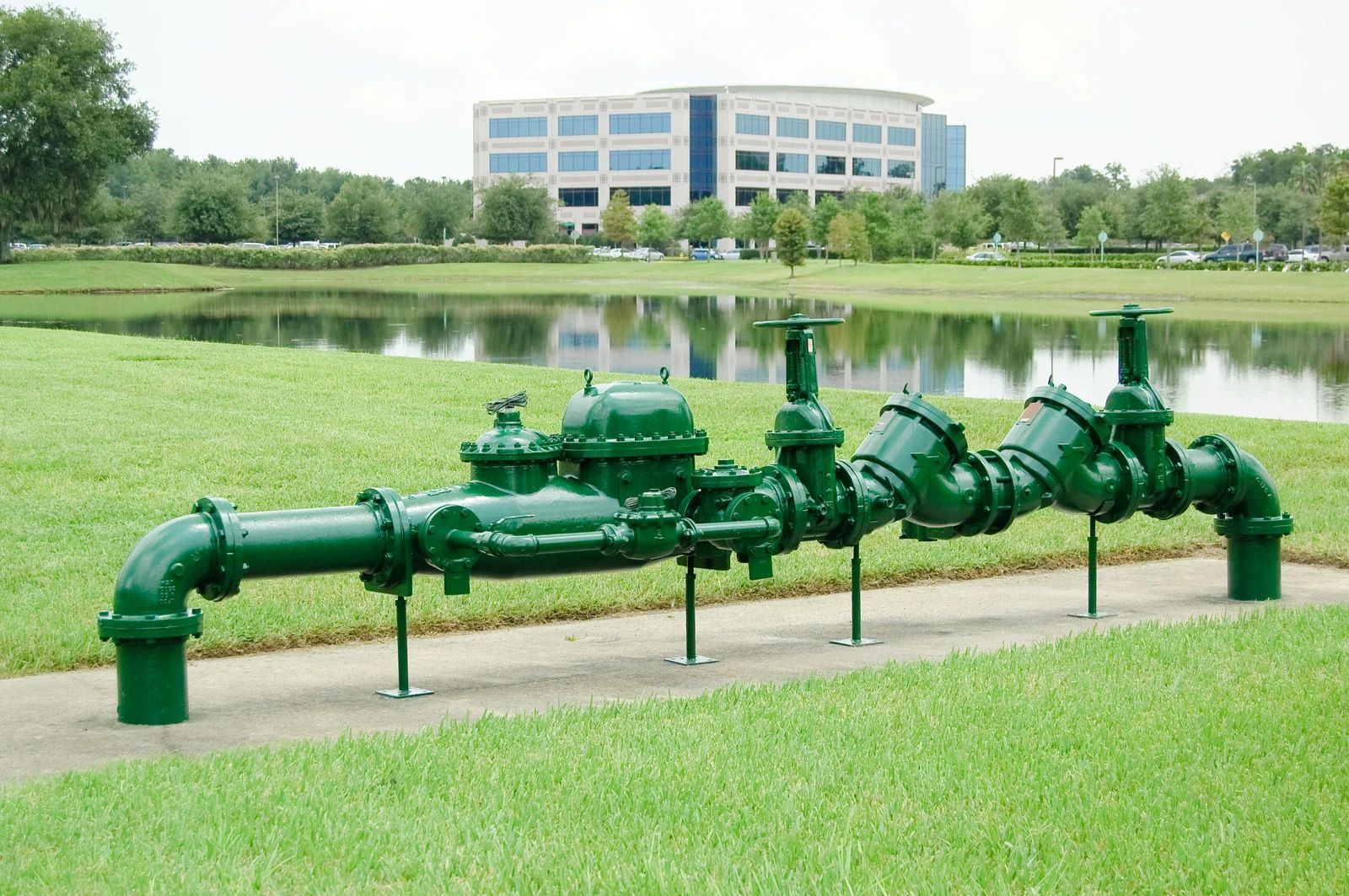
A backflow preventer is a device installed on the water line that stops this from happening. It is a one-way gate: it lets clean water in but mechanically prevents any water from flowing back the other direction. In a commercial setting, where the plumbing often connects to equipment, processes, irrigation, boilers, or chemicals that you absolutely do not want in the drinking water, the backflow preventer is the barrier keeping the building's water, and the public supply it connects to, safe from contamination.
So the device is a guardian sitting between potential contaminants and the clean water everyone in the building drinks, washes with, and uses. That is the job the annual test is checking on.
Why It Has to Be Tested Every Year
The backflow preventer is a mechanical device with internal parts, springs, seals, check valves, and moving components, and mechanical parts wear out. That single fact is why annual testing exists.
Over time, those internal parts can wear, stick, corrode, or fail, and when they do, the device may no longer hold back reverse flow the way it is supposed to. The critical problem is that a backflow preventer can fail silently. There is usually no leak, no alarm, no change in how the building's water looks or runs, the device can be quietly not protecting you while everything seems normal. You cannot tell by looking at it, and you cannot tell from the tap. The only way to know it still works is to test it.
That is what the annual test does: it verifies that the device is still functioning and still capable of stopping backflow. Once a year is the standard interval because it balances catching a failed or failing device reasonably quickly against the practicality of testing, and because a device that tested fine a year ago may not hold today. Water authorities commonly require this annual testing for commercial properties precisely because the protection only counts if the device is confirmed to be working, and a year is a long time for a silent failure to go unnoticed.
What the Test Actually Involves
The test itself is a simple procedure performed by a certified backflow tester, and knowing what to expect makes scheduling it easy.
A certified tester comes to the property, locates the backflow preventer, and tests it using specialized gauges that measure whether the device's internal checks and relief mechanisms are holding pressure and operating correctly. The test confirms that the one-way protection still works, that the check valves hold and the relief valve functions as designed. It typically requires briefly shutting off the water through that device during the test, so it is usually coordinated for a convenient time.
The tester then documents the result. If the device passes, you have confirmation and the record that the protection is in place for another year. If it fails, the tester identifies what is wrong, often a worn seal, spring, or check valve, and the device is repaired or, if necessary, replaced and retested so it is brought back to working order. Many areas require that the test results be submitted to the water authority, which is part of why having a certified tester handle it matters. The whole process is quick and routine, and it gives you a clear yes-or-no on whether your building's water is protected.
Tip: Keep a simple file with your backflow preventer's location, model, and the date of its last test, and set a reminder ahead of the annual due date. Commercial properties sometimes have more than one device, so noting how many you have and where they are saves time and prevents one from being missed. Scheduling the test a little before it is due, rather than scrambling at a deadline, also lets you handle any needed repair and retest without a gap in coverage or compliance.
What's at Stake If It's Skipped
It is tempting to treat backflow testing as a low-priority box to check, but the reasons it exists are serious, and skipping it carries real consequences.
The health risk is the big one
A failed backflow preventer that goes untested can allow contaminated water to flow back into the drinking water, the very scenario the device exists to prevent. In a commercial building, that can mean exposing employees, customers, tenants, or the public to contaminated water, and because backflow can reach the public supply, the risk extends beyond your own walls. This is fundamentally a public-health protection, which is why it is taken seriously.
Loss of protection you assume you have
If the device has silently failed and is not being tested, you are operating under the false belief that your water is protected when it is not. The test is what turns that assumption into a verified fact.
Practical consequences with the water authority
Because water authorities commonly require annual testing for commercial properties, an untested or failed device can put you out of compliance with their requirements, and authorities may take steps up to interrupting water service until the device is tested and confirmed working. Beyond the health stakes, that operational disruption is a strong reason not to let it lapse. For the specifics of what your jurisdiction requires, your local water authority is the right source.
The throughline is that the annual test is cheap insurance on a device whose failure can be both dangerous and disruptive, and whose failure you cannot detect any other way.
Warning: Don't assume a backflow preventer is working just because the building's water seems normal, and don't try to test or "check" it yourself. These devices can fail with no visible sign, and testing them correctly requires certification and specialized gauges, an improper attempt can disrupt the water, miss a real failure, or leave you without valid documentation. Annual testing should be done by a certified backflow tester who can verify the device, handle any repair, and provide the proper records.
Frequently Asked Questions
What is backflow, and why is it dangerous?
Backflow is when water reverses direction in the plumbing and flows backward into the clean water supply, which can happen with pressure changes in the system. It is dangerous because that reversing water can carry contaminants from inside the building back toward the drinking water, exposing people to contaminated water, which is exactly what a backflow preventer is there to stop.
Why does the backflow preventer need testing every year?
Because it is a mechanical device whose internal parts can wear, stick, or fail over time, and it can fail silently, with no leak or visible sign. The only way to know it still stops reverse flow is to test it. Annual testing confirms the protection is still working, and a device that passed a year ago may not hold today.
Who can perform a backflow test?
A certified backflow tester. The test requires specialized gauges and the training to perform it correctly and document the results, and many water authorities require that a certified tester do it and submit the results. It is not something to attempt yourself.
What happens if my backflow preventer fails the test?
The tester identifies the problem, often a worn seal, spring, or check valve, and the device is repaired or, if needed, replaced, then retested to confirm it is working again. Catching a failure is the whole point of the test, so a failed result simply means the device is restored to proper working order before it is relied on.
Is annual backflow testing actually required for commercial properties?
Water authorities commonly require annual testing for commercial properties, and many require the results to be submitted. The exact requirements vary by location, so your local water authority is the definitive source for what applies to your property. Regardless of the specifics, the test is the only way to confirm the device is protecting your water.
What could happen if I skip the test?
Beyond the health risk of an undetected failed device allowing contamination, skipping the test can put you out of compliance with your water authority's requirements, and authorities may take steps up to interrupting water service until the device is tested and confirmed working. Staying current avoids both the safety risk and the operational disruption.
Protecting Your Building's Water
Annual backflow testing is one of the most important routine tasks a commercial property has, even though the device it checks sits quietly out of sight. The backflow preventer is the one-way barrier keeping contaminated water from flowing back into the drinking supply, and because it can fail silently, the yearly test is the only way to confirm it is still doing its job. With the health of everyone in the building, and compliance with your water authority, riding on a device you cannot judge by looking at it, staying current on the annual test is simply good stewardship of your property and the people in it.
Keep your building's backflow protection verified and current — A backflow preventer can fail silently, leaving your building's water unprotected and you out of compliance, and the only way to know it still works is the annual test. With 12 years of experience, Patrick David Plumbing provides
commercial backflow testing for commercial properties throughout Pittsburgh, PA, verifying the device, handling any necessary repairs, and providing the documentation you need. Reach out to schedule your annual backflow test and keep your water protected.